

What Does Eco-Adventure Travel Mean for You?
Eco-adventure travel is defined as active, nature-based tourism that combines physical exploration with environmental stewardship, cultural respect, and local economic empowerment. It’s not just hiking through a pretty forest or kayaking a scenic river. The concept sits at the intersection of adventure and sustainability , where every trip is designed to protect the places you visit rather than deplete them. If you’ve been wondering what does eco-adventure travel mean beyond the marketing buzzwords, the short answer is this: it’s travel that gives back more than it takes.
What does eco-adventure travel mean in practice?
Eco-adventure travel is a specialized tourism segment that integrates three core pillars: physical engagement, nature immersion, and cultural connection. These aren’t separate boxes to check. They work together to create experiences that are genuinely transformative rather than just scenic.
The physical engagement piece is what separates eco-adventure travel from standard eco-tourism. You’re not just observing nature from a bus window. You’re trekking through cloud forests in Costa Rica, paddling sea kayaks through mangrove channels in Borneo, or scrambling up canyon walls in Utah. The activity itself becomes the vehicle for understanding the ecosystem.

Nature immersion goes deeper than pretty views. A well-designed eco-adventure trip teaches you how an ecosystem functions. You learn why a particular trail closes during nesting season, or why a river’s water level signals something about the health of the watershed upstream. That knowledge sticks with you long after the trip ends.
Cultural connection rounds out the experience. Authentic eco-adventure travel involves local guides who share knowledge passed down through generations, meals prepared by community members, and visits to villages where your spending directly supports livelihoods. That’s the definition of eco-adventure at its most complete.
What activities count as eco-friendly adventure trips?
The range of activities that qualify is broader than most people expect. The definition of adventure travel has expanded well beyond traditional hard physical challenges to include softer, sustainability-focused experiences.
Common eco-adventure activities include:
- Hiking and trekking on trails managed under Leave No Trace principles, with group size limits to prevent erosion
- Wildlife watching with certified naturalist guides who enforce no-touch, no-feed rules
- Sea kayaking and river paddling through protected marine or freshwater ecosystems
- Eco-trekking expeditions that exclude single-use plastics and use solar-powered base camps
- Canyoning and rock climbing in areas where operators fund trail maintenance and habitat restoration
- Wildlife monitoring and nature photography programs that contribute data to conservation research
The distinction between hard and soft adventure matters here. Hard adventure, like multi-day mountaineering or white-water rafting in Class V rapids, carries higher physical risk. Soft adventure, like birdwatching or guided forest walks, is accessible to a wider range of travelers. Both can be genuinely eco-friendly when managed correctly.
What makes an activity eco-friendly is not the activity itself but how it’s run. Truly low-impact tours exclude single-use plastics, use solar power, and enforce porter weight limits to prevent animal exploitation and erosion. Those operational details are the real test.
Pro Tip: Ask any operator for their specific waste management policy before booking. If they can’t give you a concrete answer, that’s a red flag worth taking seriously.
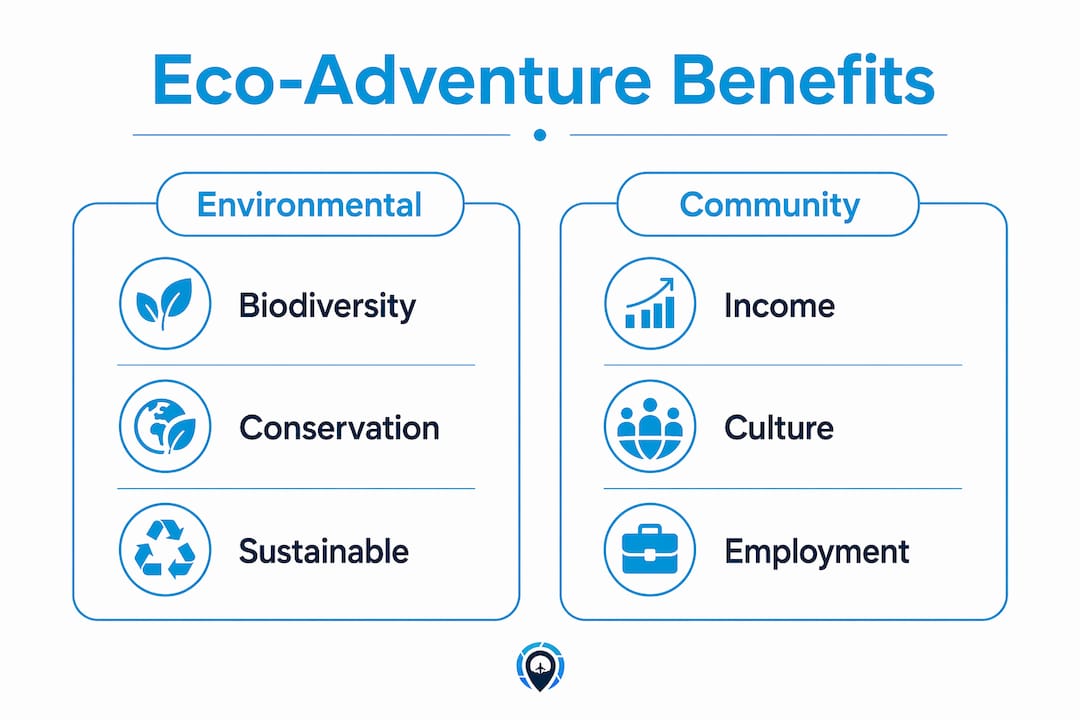
How does eco-adventure travel benefit local environments and communities?
The benefits are measurable and they go well beyond feel-good marketing. Community-managed eco-tours retain 30–50% more income locally than corporate-controlled alternatives. That gap is enormous. It means the difference between a community that can afford to hire its own rangers and one that watches outside companies extract profit while leaving little behind.
Biodiversity protection is another concrete outcome. Protected areas sustainably managed through eco-tourism can harbor 5% of global biodiversity on less than 0.01% of Earth’s surface. That statistic reflects what happens when tourism revenue funds ranger salaries, anti-poaching patrols, and habitat restoration rather than shareholder dividends.
Eco-adventure travel also acts as a conservation activism tool. When travelers choose operators committed to sustainable, non-extractive models, they send a market signal that pushes the broader industry toward better practices. Your booking is a vote.
| Benefit area | What it looks like on the ground |
|---|---|
| Local income retention | Community guides and lodges keep 30–50% more revenue than corporate-run tours |
| Biodiversity protection | Tourism fees fund ranger salaries and anti-poaching patrols in protected areas |
| Habitat restoration | Operators contribute to trail repair, reforestation, and watershed management |
| Cultural preservation | Local knowledge systems and traditions are shared and financially supported |
| Conservation incentives | Businesses adopt sustainable models when traveler demand rewards them |
Costa Rica is the most cited example of this working at scale. The country built an entire eco-tourism model around protecting its extraordinary biodiversity while generating income for rural communities. The result is a destination that has grown in popularity without destroying what made it worth visiting in the first place.
How do you spot authentic eco-adventure travel vs. greenwashing?
Greenwashing is rampant in the travel industry. Slapping the word “eco” on a brochure costs nothing. Actual sustainability costs real money, and that cost shows up in pricing and operational details.
Legitimate eco-adventure operators design trips around ecological cycles, like breeding and nesting seasons, and maintain full transparency about their sustainability practices. They can tell you exactly where their waste goes, how their guides are paid, and which conservation organizations they partner with.
Here are the red flags that signal greenwashing:
- Unrealistically low prices. Legitimate eco-tours must cover fair wages, waste hauling, and conservation permits. A price that seems too good to be true usually means someone is cutting corners on one of those costs.
- Vague sustainability language. Phrases like “we love nature” or “eco-friendly experiences” without specifics are marketing, not policy.
- No local guide involvement. If your guide flew in from another country and the local community sees none of your spending, the trip isn’t eco-adventure travel.
- Unlimited group sizes. Real eco-operators cap group sizes to reduce trail erosion and wildlife disturbance.
- No waste or energy policy. Any operator worth booking can explain their approach to single-use plastics, solar power, and waste disposal.
Seasoned eco-adventure travelers look for verifiable evidence: conservation partnerships, published waste policies, and transparent transport plans. Marketing claims don’t count. Documentation does.
Pro Tip: Before booking, ask three direct questions: Who are your local conservation partners? What is your group size limit? How do you handle waste on multi-day trips? A credible operator answers all three without hesitation.
How to plan eco-friendly adventure trips responsibly
Planning a genuinely responsible eco-adventure trip takes more than picking a destination with a rainforest. Here’s how to do it right.
- Verify operator credentials. Look for certifications from recognized bodies like Rainforest Alliance or the Global Sustainable Tourism Council. These aren’t perfect, but they require documented evidence of practices.
- Choose smaller groups. Groups of 8 or fewer people cause significantly less ecological disruption than larger tours. Ask your operator what their standard group size is.
- Prioritize local guide involvement. Local guides bring irreplaceable ecological and cultural knowledge. Their employment also keeps income in the community.
- Plan your transport thoughtfully. Overland travel or direct flights produce far less carbon than connecting routes. If you’re exploring destinations in Europe , train travel between countries is often the most responsible option.
- Respect seasonal timing. True low-impact itinerary design accounts for breeding seasons, trail recovery periods, and ecological cycles. Avoid operators who run the same itinerary year-round regardless of conditions.
- Pack sustainably. Bring a reusable water bottle, reef-safe sunscreen, and biodegradable soap. Check out sustainable travel gear options before your trip to make sure your kit doesn’t create problems at the destination.
- Follow cultural norms. Research local customs before you arrive. Ask your guide what behaviors are respectful and which ones aren’t. This matters as much as your environmental footprint.
The meaning of eco-adventure is ultimately about shifting from consuming a destination to cultivating it. Every choice you make before and during the trip either supports that shift or undermines it.
Key Takeaways
Eco-adventure travel delivers real environmental and economic benefits only when travelers choose operators with verified sustainability practices, local guide involvement, and transparent waste and conservation policies.
| Point | Details |
|---|---|
| Core definition | Eco-adventure travel combines active exploration with environmental stewardship and cultural respect. |
| Community income | Community-managed tours retain 30–50% more income locally than corporate-run alternatives. |
| Biodiversity impact | Sustainably managed protected areas can harbor 5% of global biodiversity on minimal land area. |
| Greenwashing red flags | Unrealistically low prices and vague sustainability language are the clearest warning signs. |
| Planning priority | Verify operator credentials, group size limits, and waste policies before booking any trip. |
Why eco-adventure travel is more than a trend
I’ve spent years traveling to places that most people only see in documentaries, and I’ll be honest with you: the shift toward eco-adventure travel isn’t just a marketing trend. It’s a genuine correction to decades of tourism that treated wild places like theme parks.
What I find most compelling about this style of travel is how it changes your relationship with a destination. When you’re hiking with a local guide who grew up in that forest, you stop seeing the landscape as a backdrop and start seeing it as a living system. That’s not something you get from a resort pool.
The greenwashing problem is real, though, and it frustrates me every time I see it. I’ve encountered “eco” lodges that served bottled water at every meal and “sustainable” tours that ran groups of 30 people through sensitive wildlife corridors. The word has been stretched so thin that it almost means nothing without evidence behind it.
My honest advice: treat eco-adventure travel like you’d treat any significant purchase. Ask hard questions. Demand specifics. If an operator gets defensive when you ask about their waste policy or guide wages, walk away. The operators doing this right are proud to answer those questions. They’ve built their entire business around the answers.
The future of sustainable adventure travel belongs to travelers who understand that their choices shape the industry. You’re not just a tourist. You’re a participant in whether these places survive for the next generation of travelers.
— Justin
Discover eco-adventure destinations with Travelingportrait
Ready to put this into practice? Travelingportrait has curated a collection of eco-friendly adventure destinations across Asia, Europe, and North America, each selected for their commitment to sustainable tourism and immersive local experiences.

Whether you’re planning your first eco-trekking trip through Southeast Asia or looking for responsible adventure options closer to home, the Travelingportrait destinations page is a solid starting point. You’ll find destination guides built around the same principles covered here: local guide involvement, conservation-focused operators, and experiences that leave places better than you found them. If you’re gearing up for a trip, the travel gear guide covers sustainable kit choices that work across climates and activity types.
FAQ
What is the simple definition of eco-adventure travel?
Eco-adventure travel is active, nature-based tourism designed to protect the environment, support local communities, and deliver immersive cultural experiences. It combines physical activity with environmental stewardship as a core principle, not an afterthought.
How is eco-adventure travel different from regular adventure travel?
Regular adventure travel prioritizes the physical experience. Eco-adventure travel adds environmental and community accountability, meaning operators must demonstrate conservation practices, local economic benefits, and minimal ecological impact.
What are the biggest benefits of eco-adventure travel?
The primary benefits include higher local income retention (30–50% more in community-managed tours), biodiversity protection through conservation funding, and cultural preservation through local guide involvement and community-based tourism.
How do I know if an eco-adventure operator is legitimate?
Legitimate operators provide specific answers about their waste policies, conservation partnerships, group size limits, and guide wages. Vague marketing language and unusually low prices are the clearest signs of greenwashing.
What activities are considered eco-adventure travel?
Eco-adventure activities include hiking, wildlife watching, sea kayaking, eco-trekking, canyoning, and nature photography, provided they are managed under Leave No Trace principles with certified local guides and documented sustainability practices.
Recommended
Other Posts You Might Like