What Is Documentary Travel Photography: A Real Guide
Documentary travel photography is the practice of capturing real-life stories, cultures, and human experiences with honesty, depth, and sustained engagement rather than polished impressions. It’s a genre that sits at the intersection of journalism and art, and it demands a fundamentally different mindset than pointing your camera at a pretty sunset. Where general travel photography celebrates a place’s mood and atmosphere, documentary travel photography commits to revealing truth. That means spending real time with real people, building trust, and letting the story unfold on its own terms. If you’ve ever felt like your travel photos were beautiful but somehow empty, this genre is worth understanding.
What is documentary travel photography, and how is it defined?
Documentary travel photography is defined as a photographic practice that prioritizes truthful narrative, sustained subject engagement, and authentic representation of people, places, and cultures. The industry term most professionals use is documentary photography , with “travel” specifying the context of working across destinations and cultures. Unlike a single striking image of a market stall, a documentary project might follow a family of fishermen across three days, capturing their routines, struggles, and small joys.
The core commitment is honesty. Documentary travel photography builds viewer trust by revealing authentic, sometimes contrasting cultural realities rather than sanitized or idealized images. That truthful representation creates respect and awareness that a postcard-perfect shot simply cannot. This is the importance of travel photography done at its deepest level: not just showing where you went, but why it matters.
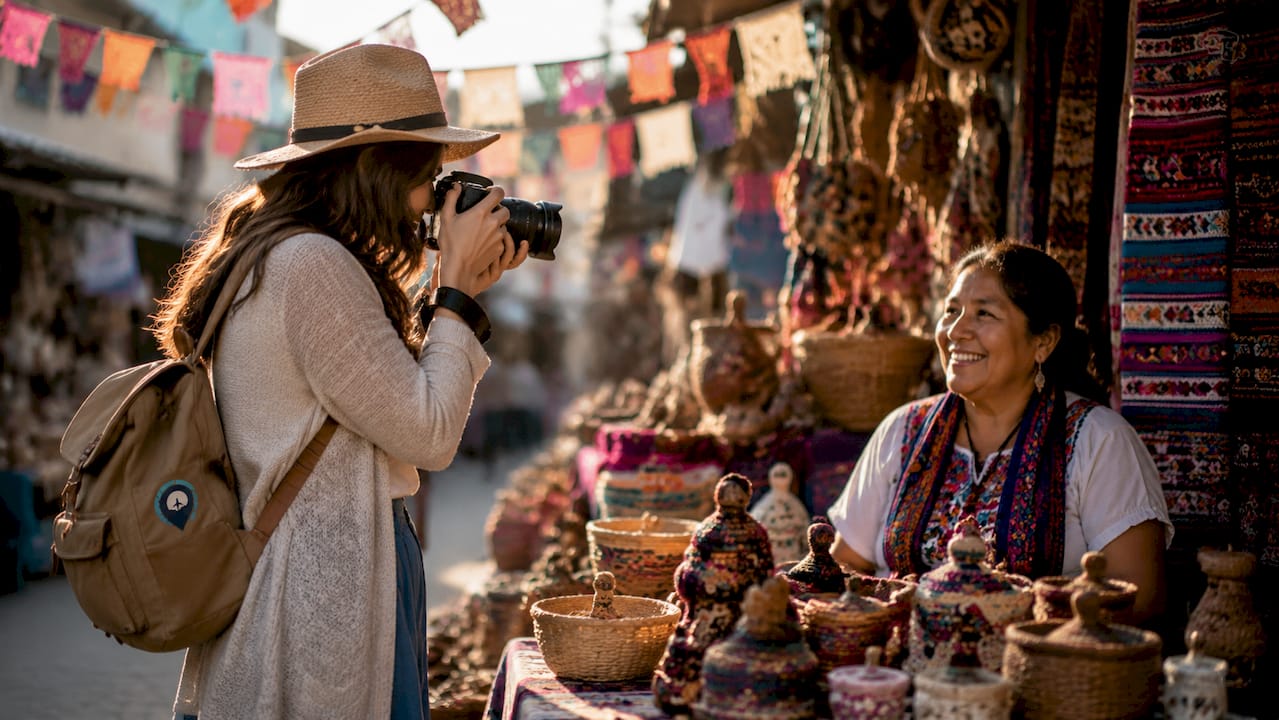
Professionals recommend dedicating at least 2–3 days per subject or story for meaningful results. That commitment separates a documentary project from a travel snapshot. You’re not passing through. You’re paying attention.
What are the core principles and ethical standards?
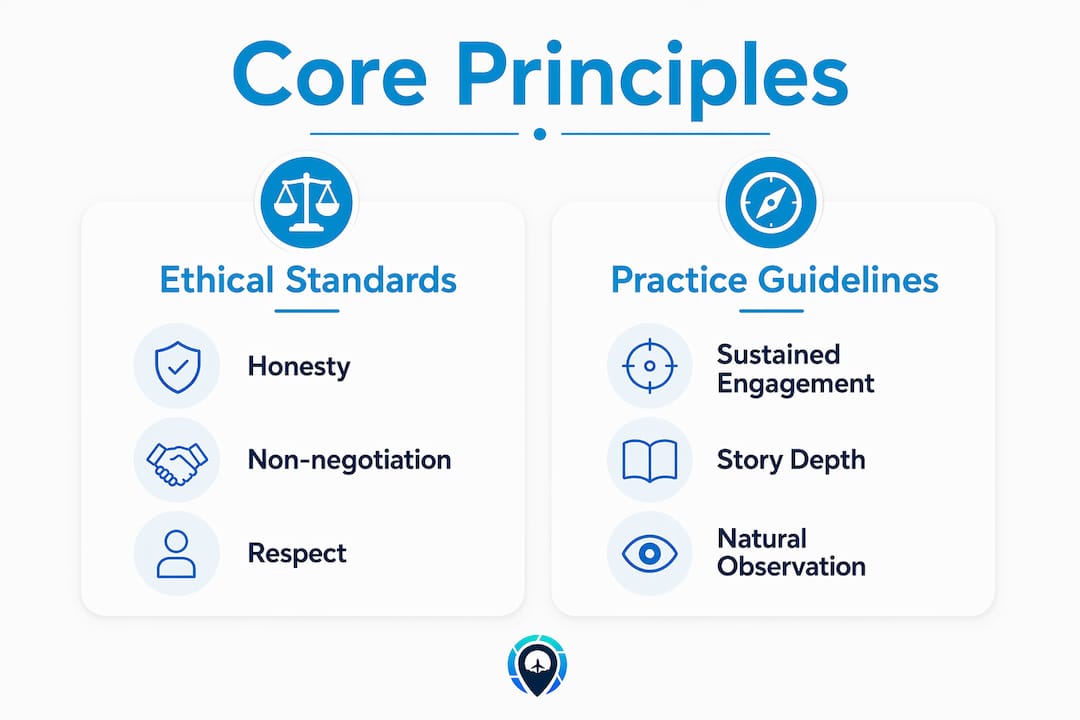
The ethical foundation of documentary travel photography is non-negotiation. Professional standards, including guidelines from the Photographic Society of America (PSA), prohibit staging scenes , adding or removing elements, or directing subjects to perform for the camera. Portraits must include environmental context to confirm authenticity. Subjects cannot be hired or posed specifically for a shot.
These rules exist for a good reason. Staging immediately undermines documentary credibility and is professionally unacceptable. Audiences and editors can often sense when something feels constructed, and once that trust breaks, the entire narrative loses its power.
Here’s what ethical documentary practice looks like in the field:
- No staging: Photograph what is actually happening, not what you wish were happening.
- Environmental context: Show subjects in their real surroundings, not isolated against neutral backgrounds.
- Cultural respect: Understand local customs before photographing ceremonies, rituals, or private moments.
- Informed consent: Where possible, communicate your intentions clearly to subjects before and after shooting.
- Honest editing: Adjust exposure and contrast, but never remove people, add objects, or alter the scene’s meaning.
Pro Tip: Before you raise your camera in a new community, spend at least an hour just observing and talking. People who see you as a curious visitor rather than a photographer with an agenda are far more likely to let you into their real lives.
Respecting natural environments matters just as much as respecting people. Documentary travel photography that covers wildlife, landscapes, or ecological stories carries the same obligation: show what is real, not what is convenient.
How does documentary travel photography differ from general travel photography?
The definition of travel photography is broader and more flexible. Travel photography includes landscapes, architecture, street scenes, food, and portraits, often aiming to capture the atmosphere or mood of a place. It allows interpretive freedom. A travel photographer might use a long exposure to make a crowded market look dreamlike. That’s a valid creative choice, but it’s not documentary work.
Documentary travel photography demands factual reporting and continuity. It’s closer to photojournalism than to fine art travel work. The goal is not to make a place look its best. The goal is to show what is actually happening there.
| Feature | Travel photography | Documentary travel photography |
|---|---|---|
| Primary goal | Capture atmosphere and mood | Tell a truthful, factual story |
| Subject focus | Places, landscapes, moments | People, communities, ongoing events |
| Time commitment | Hours to days | Multiple days per story |
| Editing freedom | High (creative interpretation) | Low (factual accuracy required) |
| Staging allowed | Sometimes acceptable | Never acceptable |
| Narrative structure | Optional | Required |
The overlap between the two genres is real. A great travel photo can carry documentary weight, and a documentary project will always include beautiful images. The difference is intent and method. Check out Travelingportrait’s guide to travel photography styles if you want to see where documentary sits within the broader spectrum of the craft.
Which techniques create compelling documentary storytelling?
Strong documentary travel photography is built on a repeatable technical framework. The wide, medium, and close-up shot sequence is the foundation. Wide shots establish context and location. Medium shots show relationships and activity. Close-ups reveal emotion, texture, and detail. Together, they give you the raw material to build a coherent visual story during editing.
Here’s a practical approach to structuring your documentary work in the field:
- Start early. Beginning work at dawn gives you the best natural light and catches subjects in unguarded, routine moments before the day gets busy.
- Shoot wide first. Establish the environment before moving closer. Viewers need to understand where they are before they can connect with who they’re watching.
- Spend hours, not minutes. Meaningful documentary work comes from sustained presence. Sitting with a subject for two hours produces far more authentic images than a 15-minute visit.
- Focus on one story. Limiting your scope improves storytelling impact and viewer engagement. Beginners who try to document five stories at once end up with none of them told well.
- Capture transitions. The moments between obvious “events” are often the most revealing. A fisherman mending his net, a vendor counting change, a child waiting. These in-between moments carry real narrative weight.
- Build sequences, not singles. Think in series. A single powerful image is great, but a sequence of 8–12 images that moves through time and emotion is what makes a documentary project memorable.
Pro Tip: Resist the urge to show subjects your photos mid-shoot. It shifts their behavior and breaks the natural flow you’ve worked hard to create. Save the screen-sharing for after the session.
For storytelling composition techniques that go deeper, the guide on composing travel photo stories is worth bookmarking.
What practical challenges should documentary travel photographers expect?
Documentary travel photography is physically and mentally demanding. Photographers often spend 10–12 hours a day walking and engaging with subjects to maintain consistency and capture meaningful content. That’s a real commitment, and it takes a toll on your body and your gear.
Common challenges and how to handle them:
- Equipment failure: Carry spare batteries, memory cards, and a moisture-proof bag. Humid climates and dusty roads destroy gear faster than you’d expect.
- Physical fatigue: Wear comfortable footwear. Seriously. Blisters on day two of a five-day project will compromise your focus and your output.
- Story drift: Your original story idea will often change once you’re in the field. Embrace spontaneity. The best documentary travel photos often come from unexpected encounters rather than rigid plans.
- Trust barriers: Patience and humble communication are the most effective tools for building authentic relationships with subjects. Rushing this process produces guarded, stiff images.
- Language gaps: Learn five to ten words in the local language before you arrive. A genuine attempt at communication opens more doors than any camera gear ever will.
The most compelling documentary travel images result when photographers accept stories as they actually unfold rather than forcing a predetermined narrative. That flexibility is not a weakness. It’s the skill that separates good documentary work from great documentary work.
For gear that holds up to sustained field work, Travelingportrait’s travel gear recommendations cover what actually performs in demanding conditions.
Key takeaways
Documentary travel photography demands sustained engagement, ethical honesty, and a commitment to narrative depth that standard travel photography does not require.
| Point | Details |
|---|---|
| Core definition | Documentary travel photography captures truthful stories through sustained, honest engagement with real subjects. |
| Ethical non-negotiables | Never stage scenes, direct subjects, or alter images in ways that change factual meaning. |
| Time commitment | Dedicate at least 2–3 days per story to produce meaningful documentary work. |
| Technique foundation | Use wide, medium, and close-up shot sequences to build flexible, coherent visual narratives. |
| Narrative focus | Limit each project to one cohesive story. Depth beats breadth every time. |
Why this genre changed how I see travel entirely
I used to come home from trips with hundreds of beautiful photos and feel strangely unsatisfied. The images were technically fine. The light was good. But they didn’t say anything. They were postcards, not stories.
The shift happened on a trip through Southeast Asia when I spent four days following a family of salt farmers in rural Vietnam. I didn’t plan it. I walked past their fields on day one, stopped to watch, and one of the daughters waved me over. By day three, I was eating breakfast with them before sunrise and photographing the full arc of their workday. Those images are the ones I’m actually proud of.
What I learned is that documentary travel photography isn’t really about photography technique. It’s about your willingness to slow down and be present. The camera is almost secondary. The real work is earning access to someone’s actual life, not just their photogenic moments.
The hardest part isn’t the early mornings or the heavy gear. It’s letting go of the shot you planned and being open to the one that’s actually in front of you. Humility is the most underrated skill in this genre. When you walk into a community as a learner rather than a photographer, people respond completely differently.
If you’re serious about this kind of work, destinations like Vietnam, India, and Japan offer extraordinary access to living cultural traditions that reward patient, respectful documentary practice. Europe is equally rich, especially in communities where traditional crafts and seasonal rhythms still shape daily life.
— Justin
Take your documentary skills further with Travelingportrait
Ready to move from understanding documentary travel photography to actually practicing it? Travelingportrait’s photography workshops are built for photographers who want to develop real storytelling skills in the field, not just technical camera knowledge. You’ll work in immersive destinations where authentic stories are everywhere.
Whether you’re drawn to the cultural richness of Asia or the layered histories of Europe , Travelingportrait connects you with destinations and expert guidance that make documentary work genuinely possible. Explore the full destinations catalog and find the project that matches your storytelling instincts.
FAQ
What is documentary travel photography in simple terms?
Documentary travel photography is the practice of capturing real people, cultures, and events truthfully during travel, with a focus on honest storytelling rather than aesthetic impression. It requires sustained engagement with subjects over multiple days rather than quick snapshots.
How does documentary photography differ from travel photography?
Travel photography allows creative and interpretive freedom to capture mood and atmosphere, while documentary travel photography demands factual accuracy, no staging, and a coherent narrative structure. The intent and ethical standards are fundamentally different.
How long should a documentary travel photography project take?
Professionals recommend spending at least 2–3 days per subject or story to produce meaningful documentary results. Shorter visits typically produce surface-level images rather than genuine narrative depth.
Can beginners practice documentary travel photography?
Yes, and the best starting point is to focus on a single, specific story rather than trying to document an entire destination. Limiting scope produces stronger work and teaches the core discipline of narrative focus faster than broad, scattered shooting.
What camera gear do you need for documentary travel photography?
No specific camera system is required, but reliability matters more than specs. Carry spare batteries, moisture-proof storage, and a versatile lens range. Travelingportrait’s travel gear guide covers what holds up in demanding field conditions.
Recommended
Other Posts You Might Like